

A stranger at home
at home in a strange land

Your 2nd grader misses the first day of school with a double ear infection, but you walk your 4th grader in, holding hands. The older they get, the sooner they loosen their hand as you approach the gate, the quicker the hug, off they go, they don’t look back, are they adjusting their hair? You stand there a spell. The whole town is draped in dark fog but you wear sunglasses so no one can see you’re crying like the kindergartners. Fogged eyes, fogged road, you drive down to the docks and park with the other men, headlights pointing out to sea, as if you’re all considering just driving your pickups straight into the Atlantic, never mind the piers and granite blocking your way, keeping you dry, holding back the land and the heartbreak and all the rest. A few guys unload tools and tarps into a motorboat and head off to do god knows what in the fog. Suddenly an odd notion flips a switch in you, loosens the tension, a change of tense.
This is my home, but I’m a stranger here.
I was conceived, my mother tells me, on an island ten miles or so from here. I was born in Boston, the de facto capital of New England, and did all my schooling in New England until I was 23 and I went off the midwest to see about corn and my great-grandfather. Flying home for Christmas from the cornfields and a stressful collaboration, I felt my body unclench over the sweep of Maine forests, the cold blue Atlantic. I remembered living in Africa for a summer when I was twenty, homesick beyond what I’d imagined possible, lying under my mosquito net in a Lariam-induced hallucinatory state in the Sahel, picturing the drive from Logan Airport north to Maine, the traffic falling away and the tall pines crowding in, cool air, crickets, stars. Home.
There’s no place on Earth where I feel more at home than in Maine, and yet I’ve learned to call myself a stranger here. I can tell you what the trees are, where the sun sets in the winter, where to look for crabs, when Arcturus is high in the sky and when the well will run dry. The pulse of insects through the seasons, the odd cry of the osprey. But over the years I’ve also realized how many unfamiliar things there are: trees oddly grown, undergrowth strangely mossed, expressions I haven’t heard, fish I do not know. Much of home is, if viewed a certain way, foreign.
It’s taken some work to sense the world this way; it would have been easier to let home feel like home, and leave it at that. Filmmaking has anchored this reorientation. In A Meter of Maine, I staked out a square meter of land in my backyard and filmed it now and again over the course of the year, gradually sensing things I hadn’t sensed before, the play of the stiff wind in winter, the path of a slug along a stem in spring. That was a short film, not much of a thing. I expanded it in Thirteen Ways, where I staked out a hectare or so on my parents’ land and invited a dozen people to wander it with me and my camera over the course of a year. That was when I first met David George Haskell, a writer and biologist who has taught me a lot about observation and wonder. I met Alan Lightman, an astrophysicist who wrote Einstein’s Dreams and stood around with his pencil talking about spirituality. On a particularly hot day, I had a vagal episode when talking to forester Dr Thomas Easley, who helped me into the cool shade of a fir tree. We’d been talking about trees and racism and indigenous knowledge, and I was embarrassed to be fainting on my home turf, weighed down by my camera gear in July’s newfound humidity. He’d never been to Maine; as a black man he remarked on Maine’s inescapable whiteness. He helped me back to consciousness under a balsam fir.
Who is a stranger? Who belongs where? Who knows what?
For The Most Unknown, I brought scientists of different disciplines together on a series of awkward blind dates. They were completely ignorant of each other’s work, strangers in each other’s labs, yet thrilled by the chance to ask questions, learn something new. What propels science is the thrill of the unknown; it’s a joy to not know. I hadn’t been taught science that way. It is a humbling way to look at the world. My recent film Observer is a continuation of this journey: what do we notice when we’re plunked down somewhere new? One man, Dallas Hudson, walks the same plot of land in his backyard everyday, an observer par excellence, humble as can be.
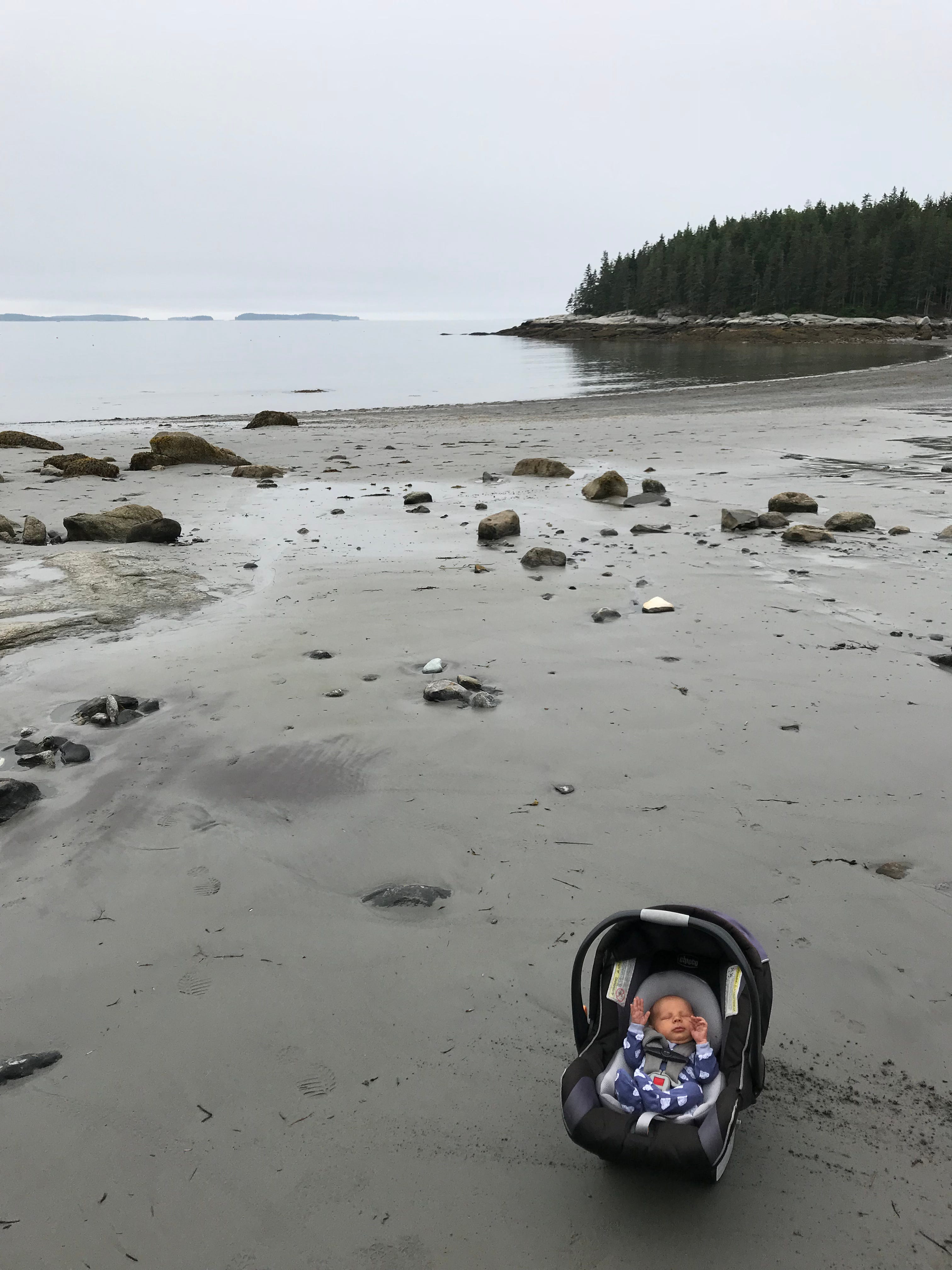
Gradually, I have learned to see my home in a new way. I am perhaps more proud of this achievement than any other, even though it’s more or less the opposite of achievement — it’s an understanding of how little I know about my own home. This paradox is thrilling. It doesn’t mean everything is unfamiliar; I go to sleep at night hearing the old crickets. I know what the water tastes like. But it means the local world is wondrous. We are everywhere travelers, visitors, strangers. I find this to be an invigorating way to think about home. If nothing else, it is an antidote to boredom, a way to keep life from slipping by too fast. But it also resets one’s sense of belonging.
The Wabanaki have been in what we call Maine longer than Europeans have, so you could suggest that they are the only ones who are not strangers here. The true locals. Of course they were once strangers here, in the years after the mile-thick glaciers receded 11,000+ years ago. On geologic time scales, no one comes from nowhere. But still, the Wabanaki are what we consider indigenous to Maine. How many years do you and your blood relatives need to live in a place before you become native to the place? Is it faster for some cultures than others? What constitutes a sense of place? These are lovely and fascinating questions. But for as long as we’ve had nation states, these concerns have also been weaponized; they are the harbingers of xenophobic exclusion acts, deportations, and all sorts of other idiotic behavior. Everyone’s just making up whatever rules they like. You go back far enough and we’re all bumbling strangers; every visitor deserves a chance to feel at home.
It’s somewhat fashionable now in Maine to footnote your emails by saying that you live on “unceded Wabanaki lands.” I don’t know precisely why people do this, whether it’s to remind their email correspondents that America was not peaceably settled but violently taken, or to suggest that this land should be returned to its prior inhabitants, or some other purpose. Perhaps it’s that colonial powers exercised such devastating judgment that the descendants of these colonists seek out whatever meek opportunities they can find to apologize, even if it’s just in an email signature.
I appreciate it as an expression of discomfort, an acknowledgment that we’re not sure where we belong — any of us. Perhaps the moment you feel you belong, the moment you become an insider, that’s when you start putting up fences. You start shutting other people out. Bullies are insiders. Plenty of people are. Folks with a few generations of family roots in Maine are quick to ask a stranger whether they grew up in Maine. If not, you are “from away.” I’ve sensed this mild and absurd brand of xenophobia to be on the wane, but who knows.
After all, a sense of belonging is pretty darn nice. Without it, we’d be unmoored. I love being home. So I try to keep both things at once: I belong here, and I do not. This is my home, and I too am a stranger here. I know this land, but it is mostly unknown to me. As a filmmaker, the camera gives me a sense of capturing the land, of owning it in some way; it arbitrates my relationship to the world. But it also reminds me that what I’m capturing is a brief glimpse, a sliver of time and sky. I do not own it in any sense. And there’s still so much I haven’t learned to see.
Lovely as always. It’s intriguing to think about how many people you have brought to Maine for varying lengths of time and numbers of visit to collaborate in your filmmaking and thus see the land and the people there through their own eyes and yours. I am much more of a stranger there than you of course and yet I also feel a sense of belonging in what you describe. Can we feel at home in more places than one? And a stranger everywhere? And are these feelings both tied to a sense of physical place while also being the feelings you bring with you wherever you go?