

Tucson
& the old ceremonies

I haven’t stayed in touch with the author Michael Pollan in any regular way since our days in the cornfields, but we have dinner now and again when our routes intersect, and I was pleased to see him wander into terrain that I myself have stumbled into in recent years: the study of consciousness. Driving to the airport the other day, I gave his new book a listen, recognizing many of the experts from my own films and making a mental note to correct his calling Captain Kirk’s right-hand-man Doctor Spock, when he went by the more beguiling Mister Spock, sparing any confusion with the author of books on child-rearing who, as it happens, was a member of my secret society at Yale. I’m sure authors love getting these sorts of nitpickings from Trekkies, nevermind Yalies.
One bit of the book caught my attention in particular. Michael mused on the idea that consciousness likely has a lot to do with our bodies, not just our intellects, and suggested that our evolving research on the mind might, rather surprisingly, bring us closer to non-human animals — the same animals that western culture has been trying to distance itself from for centuries amidst our ongoing quest to dominate ecosystems, justify confinement and generally feel special.
As it happens, I was flying to San Francisco to talk to technologists about computers. I’m not alone in wondering whether our current AI growth spurt - which of course has tremendous overlap with the study of consciousness - might actually spawn a new sense of what it is to be human. To have a body, a pulse, a wet brain and thumping, trembling veins. To feel sun on skin, panic in bowels, salt in eyes. The more time I spend with screens, the more I wonder what it was like before them, even in my own life. For the first two-thirds of my life, up until I was 30 years old, an airport wasn’t a place where I looked at my phone, it was a place where I sat and looked about me. My sensorium must have been different; I was a different animal.
What sort of animals are we?
San Francisco was enduring a heat wave, but its beauty was in full swing. I love it there — the wild steep hills, dramatic bridges, $9 cups of coffee. Some of the animals there have billions of dollars and private chefs, other animals slump on street corners under fentanyl before dawn, but most wander the messy world in between, delivering food, joining Zoom calls, writing code, tuning guitars, you name it. One of my interviews was with Astro Teller, the grandson of Edward Teller, inventor of the hydrogen bomb. Astro - he’s named after his erstwhile haircut - runs Google’s X lab and wears rollerblades. I liked him. They take some of the advertising money that Google rakes in and try to build interesting things, like robots that help farmers figure out what their crops need. Driverless cars. Flying robots. That sort of thing. While acknowledging the risk of things going awry, he defended the optimism around AI by suggesting a certain inevitability to it, and recommended that we approach it not with fear and suspicion, but in a way with a kind of love.
If these machines are what we bake into them, then I reckon he’s got a point. And love is something we do fairly well, all things considered. I think it’s the animals in us. Few would argue that love lodges in the mind, which means it courses elsewhere through our bodies; it’s as much in our skin & fingertips as in our neurons. I’ve never done psychedelics, but I’ve heard tell that it’s an experience in which love bubbles freshly up into the mind and out across the expanse of the universe — suggesting that we suppress it in our daily grind, like a buried spring.
As it happens, I’ve been thinking lately about the suppression of my own creative instincts. In the same way that setting my alarm keeps me from sleeping well - and dreaming well - I have wondered whether deadlines and grant requests, ostensibly engines of productivity and possibility, have instead slowly suffocated me. I thought about this while preparing a “pitch desk” for an advertising agency that approached me about doing a job for them. These things are a hoot: colorful blasts of total bullshit. I couldn’t stomach it for long, so I ended up letting myself go wild, writing long dense paragraphs about my methodology and ethic which they of course completely ignored, rightly depriving me of the absurdity of earning $10,000 a day for filming some horses jump around in Texas. I emerged penniless but creatively intact, the gamble being that in the long run I’ll be a happier animal.
I asked Astro if he knew the musician Jonathan Richman, and he looked at me blankly. Jonathan Richman, like Werner Herzog, Agnes Varda, and Terence Nance, is one of those artists I admire whose mad love of life imbues an ecstasy to their work that lights you right up. Google’s X looked like a pretty darn interesting place to work, but I also wonder if there’s too much money at Google to really light a person up; stars only ignite under particular conditions and constraints.
A few days later, we got to talking about star birth with David Levy, the famed comet hunter, in a backyard observatory outside of Tucson. It was a beautiful evening, the day’s 104º heat fading into the desert blue as we trained a big Dobsonian on the Orion Nebula, a classic first stop for first time stargazers, and a so-called stellar nursery where hydrogen starts banging together into helium, releasing an ignition of energy. David, who I’d filmed with years ago for The City Dark, is more rickety now but still whip smart, quietly reciting poetry as we took turns climbing the stepladder to the eyepiece.
I think the stars unleash us, or release us. I don’t know what to call it. I’ve always had a hard time describing the strange gift that the stars give us as human animals. I don’t give a damn about the practical parts of astronomy— like the much ballyhooed ancillary engineering benefits of certain lenses or space fabrics — which I think distract us from the wilder thrill of these sky lights. A night with the stars changes you, and I don’t understand how. You don’t feel the warmth of their touch, though they are suns. You don’t sleep well. You feel a little smaller. But you also know you’ve been zagged in a new direction, the future getting a little more unknown, like you were visited by angels who spoke to you in a language you couldn’t parse, but could only wonder at.
Computer scientists have described to me that their early experiences with coding gave them a thrill that I think aligns with all this. I believe them, I can see it in their eyes. It wasn’t always about money. There was a raw creative force at play, a sort of magic, the code like a trail of runes that alchemically transformed nothing into something. I don’t know, I’ve never done much of it, but I’m spending some time trying to step into their sneakers. Nowadays software like Claude can harness the black box of “AI” to code more quickly than any human could, and I wonder whether the thrill holds. Anyone who has used the Large Language Models can testify to the peculiar magic of the computer talking to you, but I wonder whether we’re crossing a technological line that our animal bodies cannot grok, and we’ll be leaving the joy behind.
In Tucson we talked to a Diné woman named Chucki a few hours before a rock show she was going to play. The conversation swung towards the borderlands, and immigration, and I asked her whether her culture’s deep history in America gave her a unique perspective on who should be welcome in this place. She didn’t claim to speak for all Diné, never mind all native peoples, but she said there was a reason white colonists gained a foothold on these shores; the people already here often welcomed them, or in other cases had no formal articulation of ownership and borders. I got the sense that the western idea of borders just didn’t make that much sense to her.
Chucki also expressed something I’d heard once or twice before, and that has haunted me since. She said that the people coming from Europe had forgotten their ceremonies, had somehow left them behind. I interpreted this comment as being imbued with a combination of pity and dismay, as if she was saddened that there was no way that white people could behave well — we are so far astray.
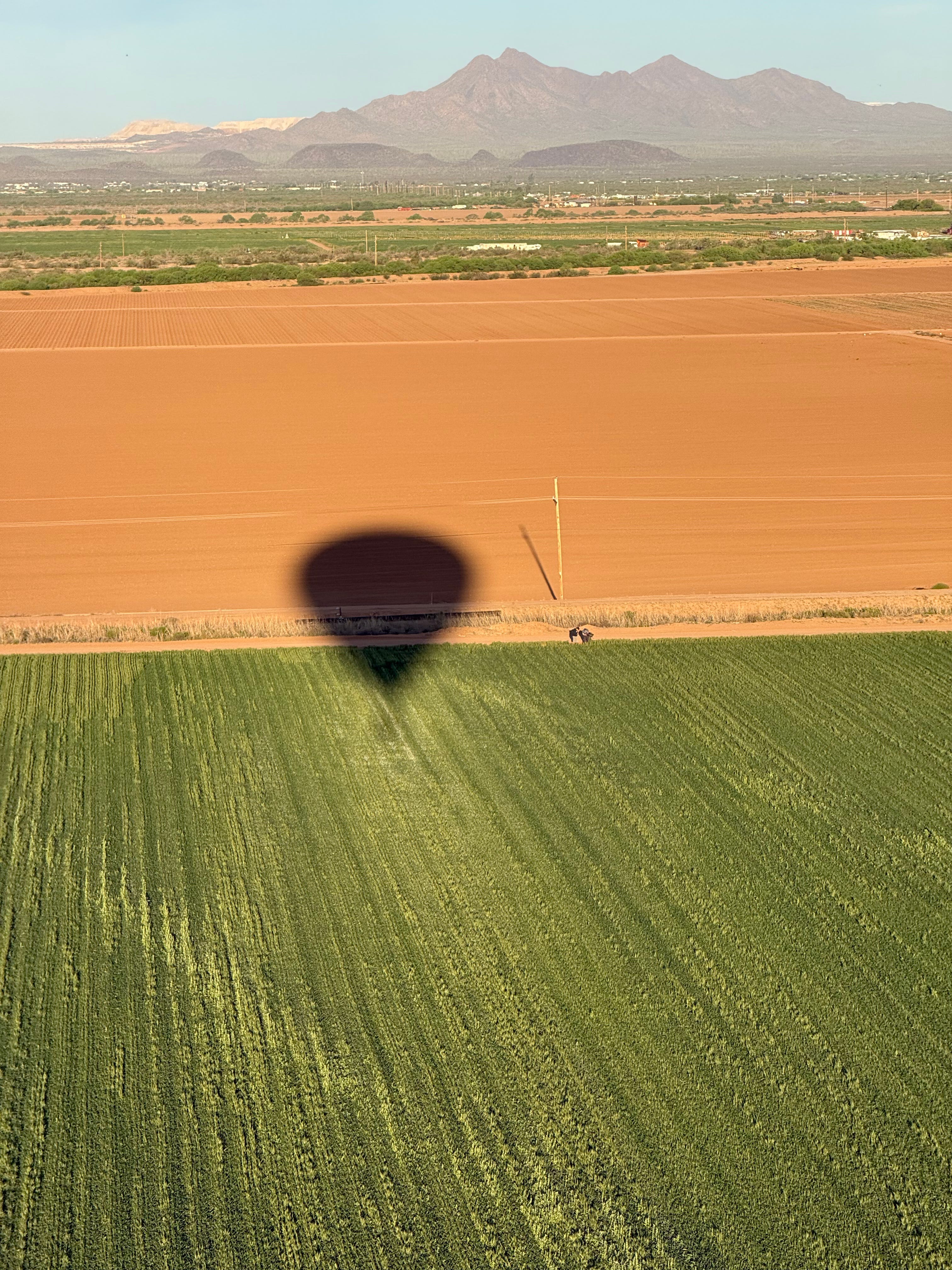
Most nights, during my interval in the early hours, I have been reading what I can about the old ceremonies in Europe. I’m talking of course about the druids, the pagan ways more or less wiped out by the monotheistic religions that spread out of the Levant. I think these are the old ceremonies, the ones we’ve mostly lost in western culture. They pop up now and again on the fringe, or by other names, often before being swallowed by modernity — neodruidism, rainbow gatherings, counter-cultures, burning men festivals. But you don’t get much of it in your formal schooling; my kids pledge allegiance to a flag but not to trees, wild animals, streams.
What sustains us? What releases the best in us? What sort of animals are we?
Astro said he was developing an AI technology that can analyze waste streams on a molecular level, rescuing billions of dollars of valuable materials before they end up in landfills. Rooted in capitalist rhetoric, I think this is nonetheless a relic of the old ceremonies, an aversion to wasting the planet. Let us use the whole animal, as it were. It’s a reminder that we’re not all gone, not yet. We’re all twisted around, for sure, but we are yet animals moved by stars and molecules and fingertips.
Back in Maine, I sat in my truck by the harbor watching the rain and eating a ham sandwich for breakfast. One of my little ceremonies. The rest of the day would brim with machines. Each day of filming generates about 2TB of footage which must be ingested, backed up, transcoded, synced and organized for my editing colleagues. My hard drives are precious cargo, tiny jewel boxes made of metals pulled from the earth, somehow etched now with traces of this world, Chucki and Astro and so many others, animals we will try to honor with the strange, imperfect ceremony of filmmaking. It’s good for now, but there’s no telling how long it will last.
A beautiful hopscotching of thoughts as always. I might posit in the spirit of this lovely piece that communal cooking and the sharing of food is a human ceremony. Chucki mentioned how hunting parties would share the fruits of their hard work. We may be missing something with ovens and induction cooktops where the actual fire has been replaced. But the joy of the process has its own rewards and we had a saguaro cake and Parker House rolls to prove it.